Essential CSS
JavaScript Roadmap
Learn JavaScript
Mastering Web Typography
Practical Astro
Understanding Async JS
Unorthodox Tailwind
API Masterclass
Build and Deploy
The Beginner Freelancer
Real World Node
Profile Billing Logout
Understanding Async JS
Lesson Plan
  1. Introduction
    1. What is Asynchronous JS?
    2. Callbacks are not automatically asynchronous
    3. What is an API?
    4. Evolution of HTTP APIs
    5. Ajax vs Asynchronous JavaScript
  2. Fundamental Concepts
    1. How to fetch resources
    2. Using XHR
    3. Using the Fetch API
    4. Using libraries
    5. Core JavaScript concepts
    6. Understanding Promises
    7. Understanding Async Functions
    8. Understanding the Event Loop
    9. Understanding JSON
    10. Async JS Best Practices
    11. Using Optimistic UI
  3. Understanding Rest API
    1. Diving into Rest APIs
    2. The Rest Architecture
    3. The Rest Structure
    4. Anatomy of a Request
    5. What's an endpoint
    6. Request methods
    7. Understanding request headers
    8. Understanding the request body
    9. Authentication
    10. Basic Authentication
    11. Bearer Authentication
    12. Authenticating with API keys and API Secrets
    13. Cross Origin Resource Sharing
    14. Anatomy of a response
    15. HTTP Statuses
    16. Response headers
    17. The response body
    18. Handling Errors
    19. Reading API documentations
    20. Understanding Curl
  4. Node Basics
    1. Why we are using Node
    2. Command Line Basics
    3. Installing Node
    4. Managing dependencies
    5. Using ES Modules in Node
    6. Using Node
    7. Restarting the server automatically
    8. Sending requests via Node
    9. Protecting API keys and secrets
  5. Building a server
    1. What's a server
    2. Building a simple server with Express
    3. Two kinds of servers
    4. API Server architecture
    5. Handling routes
    6. Understanding Middlewares
    7. Enabling CORS
    8. Receiving data
    9. Sending responses
    10. Handling errors in Express
    11. Using the server as a proxy
    12. Minimum viable server
  6. Open Authorization
    1. Open Authorisation (OAuth)
    2. Authenticating with Access Tokens
    3. Obtaining Access Tokens
    4. Public and Confidential Clients
    5. Authorisation Code Grant
    6. Understanding scope
    7. Proof Key for Code Exchange (PKCE)
    8. PKCE with Twitter
    9. Dynamic state and `code_verifier`
    10. Saving the access token in cookies
    11. Passing access tokens to the browser
    12. Saving the access token in local storage
    13. Refresh Token Grant
    14. Device Code Grant
    15. Client libraries vs REST
  7. Building Social Media Logins
    1. Introduction
    2. Starter Files
    3. Creating SSL certificates
    4. Login in with Github
    5. Github: Saving the token to local storage
    6. Github: Persisting the login status
    7. Login with Twitter
    8. Twitter: Saving the token to local storage
    9. Twitter: Persisting the login status
    10. Twitter: Refreshing the access token
    11. Login with Facebook
    12. Facebook: Saving the token to localStorage
    13. Facebook: Persisting the login status
    14. Facebook: Refreshing the access token
    15. Login with google
    16. Google: Saving the token to localStorage
    17. Google: Refreshing the access token

Authenticating with API keys and API Secrets

1m:42s

Many APIs let you authenticate with an API key or with both an API Key and an API secret.

For now, you can think of the API Key and API Secret like your username and password — except these values are programmatically generated.

In general, you should treat your API Key and API Secret like this:

  • If you only have API Key:
    • Treat the API key like your password.
  • If you have both API key and secret:
    • Treat your API key like your username
    • Treat your API secret like your password

Using with API Key and API Secret

There’s no standard way (as far as I know) to authenticate with API Keys and API Secrets, so each provider implements the authentication process differently.

But they usually use one of these methods

  1. Send the API Key and Secret in an Authorization header
  2. Send the API Key and Secret through a query parameter
  3. Send the API key and secret in the body

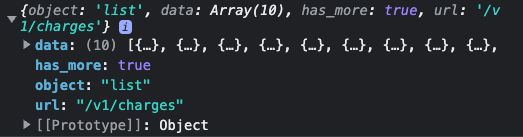
For example, Stripe lets you authenticate with an API key through an Authorization header that begins with Bearer — so Stripe’s API Key doubles up as an access token.

fetch('https://api.stripe.com/v1/charges', {
headers: {
Authorization: 'Bearer sk_test_KCm2E9suIKWjVpiKvS8OoSKl',
},
})
.then(r => r.json())
.then(console.log)
.catch(console.log)
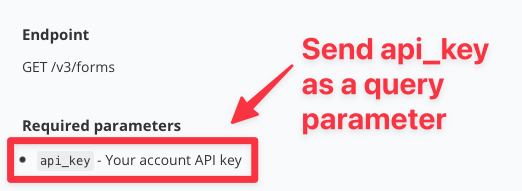
Another example, Convertkit, an email newsletter platform, ask you to send in an API key as a query parameter.
Using API Keys and Secrets in SDKs

Some apps may provide you with libraries that make their API easier to use. These libraries are usually called Software Development Kits (SDK).

In these SDKs, they may ask you to enter the API or Secret directly into the function they provide you with. For example, Stripe does this.

import Stripe from 'stripe'
const stripe = new Stripe('YOUR_API_KEY')

That’s all you need to know about authenticating with API Keys and Secrets for now!

Next, let’s talk about one important thing that trips up most developers when using Rest APIs — CORS.