Object Oriented Programming is a style of writing JavaScript that uses Objects.
We use Object Oriented Programming when we want three things:
- We want to create instances of objects
- We want to extend objects via Inheritance
- We want to hide properties via Encapsulation
Inheritance and Encapsulation are more advanced. We’ll talk about them later in this module. For now, let’s focus on creating instances.
Creating Instances of Objects
Let’s say you want to create an object that stores information about a human. This object should have two properties: firstName and lastName.
If the person was Zell, you might write something like this:
const zell = { firstName: 'Zell', lastName: 'Liew',}Now let’s say you want to create a second object that contains the same information about another human being.
If this person’s name is Vincy Zhang, you might write this:
const vincy = { firstName: 'Vincy', lastName: 'Zhang',}Pay attention to the two blocks of code above. Can you see that zell and vincy have the same properties and methods?
We can create a blueprint that spits out firstName and lastName. One way to create this blueprint is to use a constructor.
We can then use the constructor to create humans like zell and vincy. Objects created from blueprints are called instances.
Creating a constructor
A constructor is a function. We begin constructors with a capital letter so we know it’s different from normal functions.
In this case, let’s call the constructor Human.
function Human() { // ...}We can use the this keyword inside a constructor to create properties. The this keyword refers to the instance that’s going to be created later.
function Human(firstName, lastName) { this.firstName = firstName this.lastName = lastName}Creating an instance
You create an instance by doing two things:
- Use the
newkeyword - Call the constructor function
// Creating an instanceconst zell = new Human('Zell', 'Liew')You can create as many instances as you want. Each instance will retain their individuality.
const zell = new Human('Zell', 'Liew')const vincy = new Human('Vincy', 'Zhang')
console.log(zell)console.log(vincy)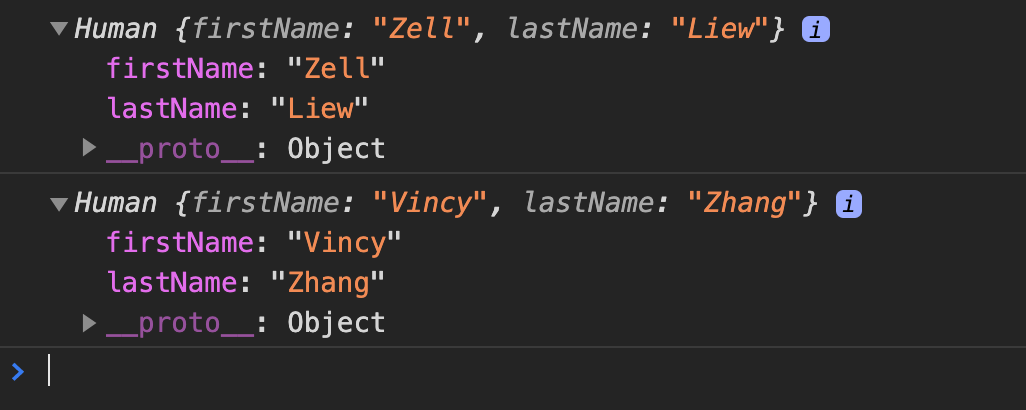
zell and vincy are instances of Human. Instances in the wild
You have been creating instances without knowing it.
For example, when you create an array with [], you actually create a new instance of Array. JavaScript simply lets you use [] as a shorthand to new Array()
// These two arrays have an identical structureconst array = ['hello']const array2 = new Array('hello')
console.log(array)console.log(array2)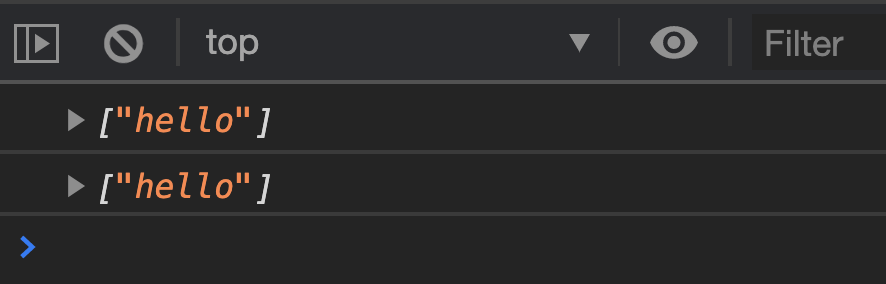
The same applies to Objects. You’ve been creating Objects with {}. But JavaScript uses new Object() behind the scenes.
// These two objects have an identical structureconst object = { property: 'value' }
const object2 = new Object()object2.property = 'value'
console.log(object)console.log(object2)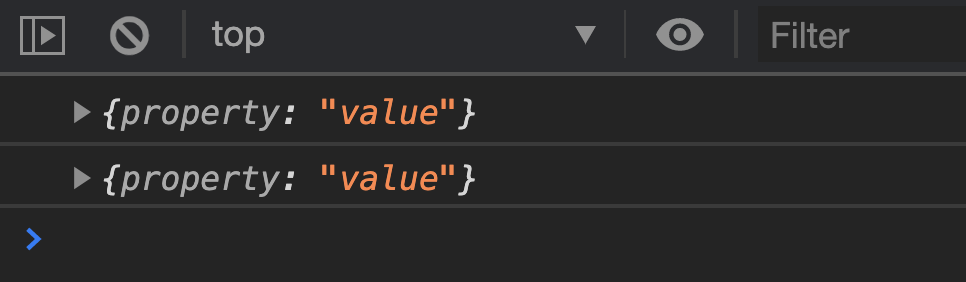
Another example: You can create elements with document.createElement. When you use this method, you actually create a new Element object.
However, you don’t use the new keyword this time round.
const p = document.createElement('p')Why? Because there are many flavours of Object Oriented Programming! Some of them don’t need new. We’ll dive into these flavours in the next lesson.
Exercise
- Create a
Humanconstructor that containsfirstNameandlastNameproperties - Create three instances with different names.
- Create a
sayNamemethod in the constructor. This method should log the instance’sfirstNameandlastName.
Welcome! Unfortunately, you don’t have access to this lesson. To get access, please purchase the course or enroll in Magical Dev School.
Unlock this lesson